Explore the advanced AI-powered weapons the United States could potentially deploy in Venezuela, including drones, cyber warfare tools, and autonomous systems. Analyze their capabilities, ethical implications, and references from leading defense and technology sources.
Introduction
Artificial Intelligence (AI) is transforming modern warfare, with the United States at the forefront of integrating advanced AI-driven systems into its military arsenal. In hypothetical scenarios involving Venezuela—a nation with complex geopolitical tensions—the deployment of AI-powered weapons raises critical questions about technology, ethics, and international law.
This article examines the primary AI-enabled military technologies the U.S. could employ, their operational roles, and the broader implications for regional and global security.
Key AI-Powered Weapons and Systems
1. Autonomous Drones and Unmanned Aerial Vehicles (UAVs)
The U.S. military has pioneered the use of drones, evolving from reconnaissance to armed, fully autonomous systems. Modern UAVs, such as the MQ-9 Reaper (U.S. Air Force), are increasingly enhanced with AI for target recognition, navigation, and adaptive mission planning.
- AI Capabilities: Real-time image analysis, autonomous flight path adjustment, dynamic threat detection.
- Potential Use in Venezuela: Surveillance of strategic sites, precision strikes, intelligence gathering.
Reference:
2. Cyber Warfare and AI-Driven Electronic Warfare
AI is central to U.S. cyber operations, enabling rapid detection of vulnerabilities, automated countermeasures, and offensive cyber tools. The U.S. Cyber Command leverages AI for both defense and attack, using machine learning to identify threats and orchestrate complex cyber campaigns.
- AI Capabilities: Automated threat hunting, malware analysis, real-time network defense.
- Potential Use in Venezuela: Disrupting military communications, targeting critical infrastructure, information operations.
Reference:
3. Autonomous Ground Vehicles and Robotic Systems
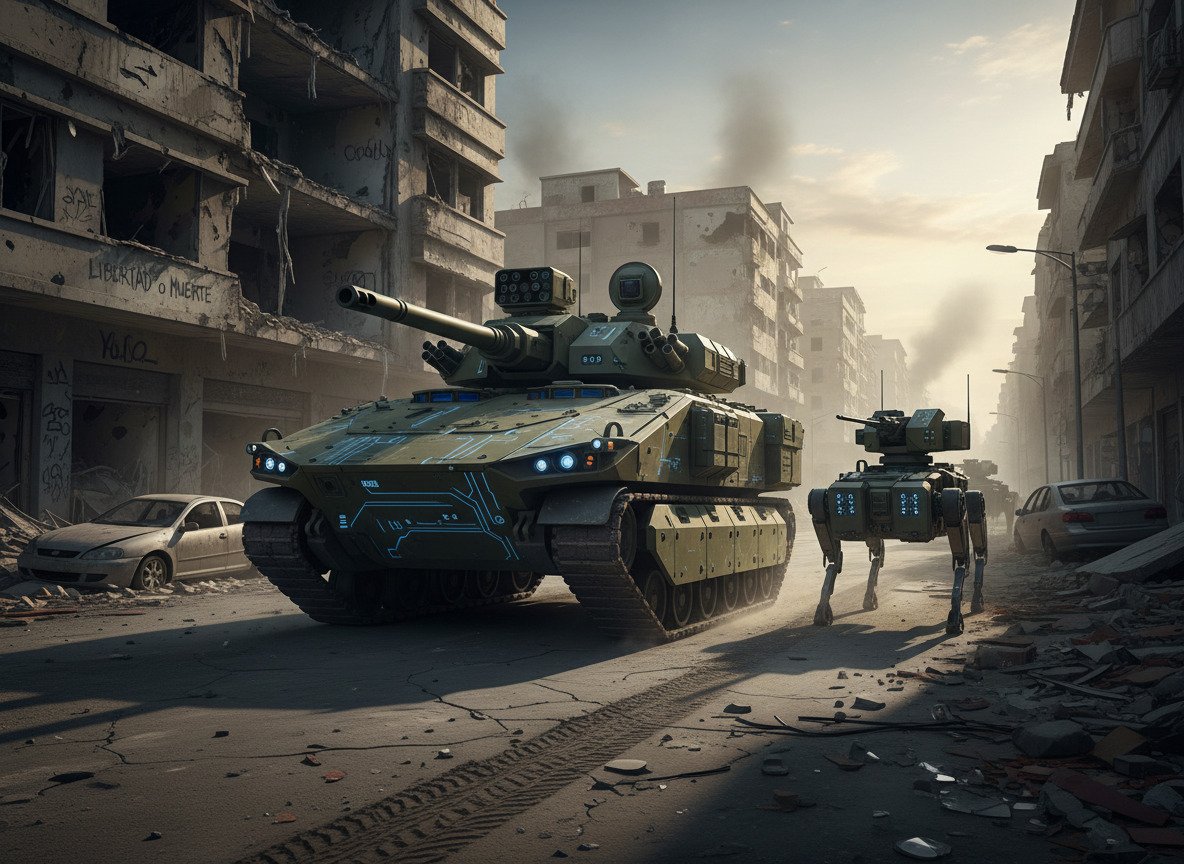
The U.S. Army has invested in autonomous ground vehicles for reconnaissance, logistics, and direct engagement. AI enables these platforms to navigate complex terrain, identify threats, and operate in contested environments with minimal human intervention.
- AI Capabilities: Obstacle avoidance, target identification, autonomous resupply.
- Potential Use in Venezuela: Border patrol, urban operations, remote surveillance.
Reference:
4. AI-Enhanced Surveillance and Reconnaissance
AI-driven analytics are integral to intelligence, surveillance, and reconnaissance (ISR) missions. Systems like Project Maven use deep learning to process massive amounts of video and sensor data, rapidly identifying objects and patterns of interest.
- AI Capabilities: Automated image/video analysis, anomaly detection, predictive analytics.
- Potential Use in Venezuela: Monitoring troop movements, identifying illicit activities, mapping terrain.
Reference:
5. AI-Enabled Missile Defense and Precision Strike
Modern missile systems incorporate AI for improved targeting, trajectory prediction, and adaptive countermeasures. The Patriot Missile System and emerging hypersonic weapons rely on AI for real-time data fusion and rapid response.
- AI Capabilities: Multi-sensor data fusion, adaptive targeting, real-time threat assessment.
- Potential Use in Venezuela: Neutralizing aerial threats, enforcing no-fly zones, precision engagement.
Reference:
Ethical, Legal, and Strategic Considerations
Deploying AI-powered weapons raises significant ethical and legal concerns:
- Autonomy vs. Human Oversight: The risk of unintended escalation due to fully autonomous actions.
- International Law: Compliance with the Laws of Armed Conflict.
- Civilian Safety: Ensuring AI systems can distinguish between combatants and non-combatants.
- Global Precedent: Potential for AI arms races and destabilization.
Reference:
Conclusion
AI-powered weapons represent a paradigm shift in military capability, offering unprecedented speed, precision, and adaptability. In any hypothetical U.S. operation in Venezuela, these technologies would play a pivotal role—but their use must be balanced with rigorous ethical oversight, legal compliance, and strategic caution.
For further reading on the intersection of AI and defense, visit the U.S. Department of Defense and RAND Corporation.
Sources:
- The New York Times
- Reuters
- Wired
- Defense News
- The Wall Street Journal
- United Nations
- U.S. Department of Defense
- NATO
- RAND Corporation