The Great Shift to Autonomous Agency
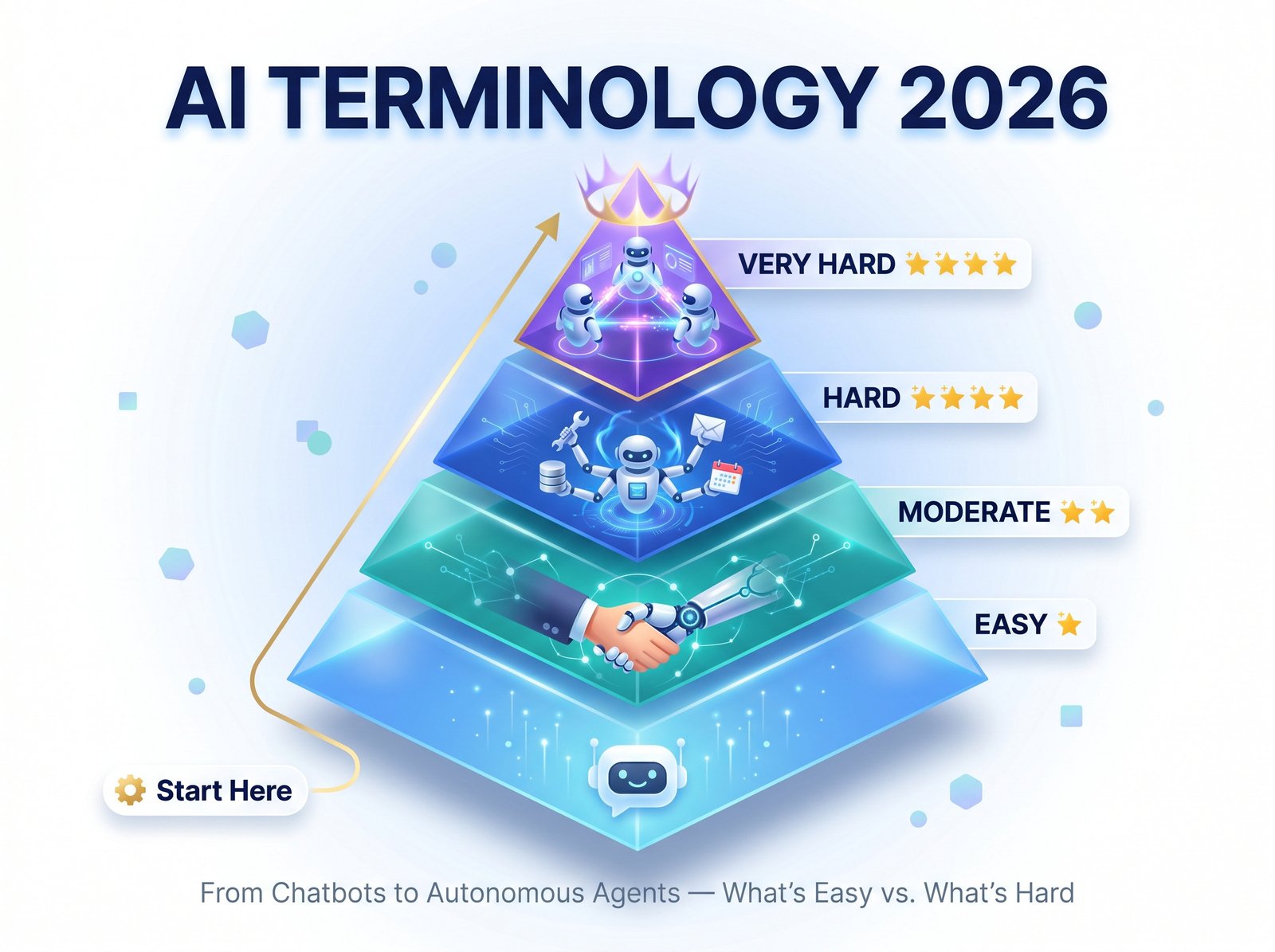
In 2024, we marveled at AI's ability to generate text and images. By 2026, the conversation has shifted from what AI can say to what AI can do. We have officially entered the Agentic AI Economy, a transformative era where AI systems are no longer just passive tools but autonomous “digital employees” capable of executing complex workflows, making decisions, and collaborating across departments. For businesses, this isn't just an incremental upgrade; it's a fundamental restructuring of how value is created. This article explores the rise of agentic systems and provides a practical roadmap for businesses to thrive in this new silicon-based workforce.
The 40% Surge: Why Agentic AI is the New Enterprise Standard
The adoption of agentic AI has reached a critical tipping point. According to Gartner, 40% of enterprise applications will feature task-specific AI agents by the end of 2026, a staggering increase from less than 5% just a year prior . Unlike traditional software that requires constant human input, these agents are “goal-oriented,” meaning they can navigate ambiguity and complete multi-step processes without manual intervention.
Forrester further predicts that 30% of large enterprises will mandate AI fluency training by 2026 to manage this new workforce . The economic incentive is clear: McKinsey research indicates that while only 10% of organizations had scaled AI agents in individual functions by late 2025, those that did reported significant gains in operational efficiency and speed to market .
From ‘Operator' to ‘Architect': Redefining the Human Role
The most profound impact of the Agentic AI Economy is the evolution of the human worker. We are moving away from the “Human as Operator” model—where employees spend the majority of their time executing repetitive tasks—to the “Human as Architect” model.
In this new paradigm, humans define the goals, set the ethical guardrails, and oversee the “silicon-based workforce” that handles the execution. Instead of spending 80% of their time on execution and only 20% on strategy, business leaders and employees are flipping the script .

This shift allows for unprecedented scalability; a single human “architect” can now manage a fleet of specialized agents handling everything from real-time supply chain optimization to hyper-personalized customer acquisition.
Practical Use Cases: Where Agents are Winning in 2026
The versatility of agentic AI is being felt across all industries. Here are the primary areas where businesses are seeing immediate ROI:
| Industry / Function | Agentic AI Application | Business Impact |
| Customer Service | Autonomous Resolution Agents | 24/7 support with 90%+ resolution rates without human escalation. |
| Sales & Marketing | Agentic Lead Nurturing | Agents that research prospects, personalize outreach, and book meetings autonomously. |
| Supply Chain | Self-Optimizing Logistics | Real-time adjustment of routes and inventory based on predictive demand signals. |
| Software Dev | AI-Native Development | Agents that write, test, and deploy code based on high-level business requirements. |
Gartner identifies Multiagent Systems as one of the top strategic technology trends for 2026, where different specialized agents “talk” to each other to solve complex organizational problems .
The Challenges of the Silicon Workforce: Trust and Data
Despite the potential, the transition to an agentic economy is not without hurdles. A 2025 Deloitte survey revealed that 48% of organizations still struggle with the searchability and reusability of their data, which is the “fuel” for autonomous agents . Furthermore, McKinsey reports that 86% of leaders feel their organizations are not fully prepared to adopt AI in day-to-day operations .
The “Agentic Reality Check” requires businesses to focus on two critical areas:
1.Data Readiness: Ensuring data is structured, accessible, and clean so agents can make informed decisions.
2.Governance & Trust: Implementing “Confidential Computing” and AI security platforms to protect sensitive corporate data while agents operate autonomously .
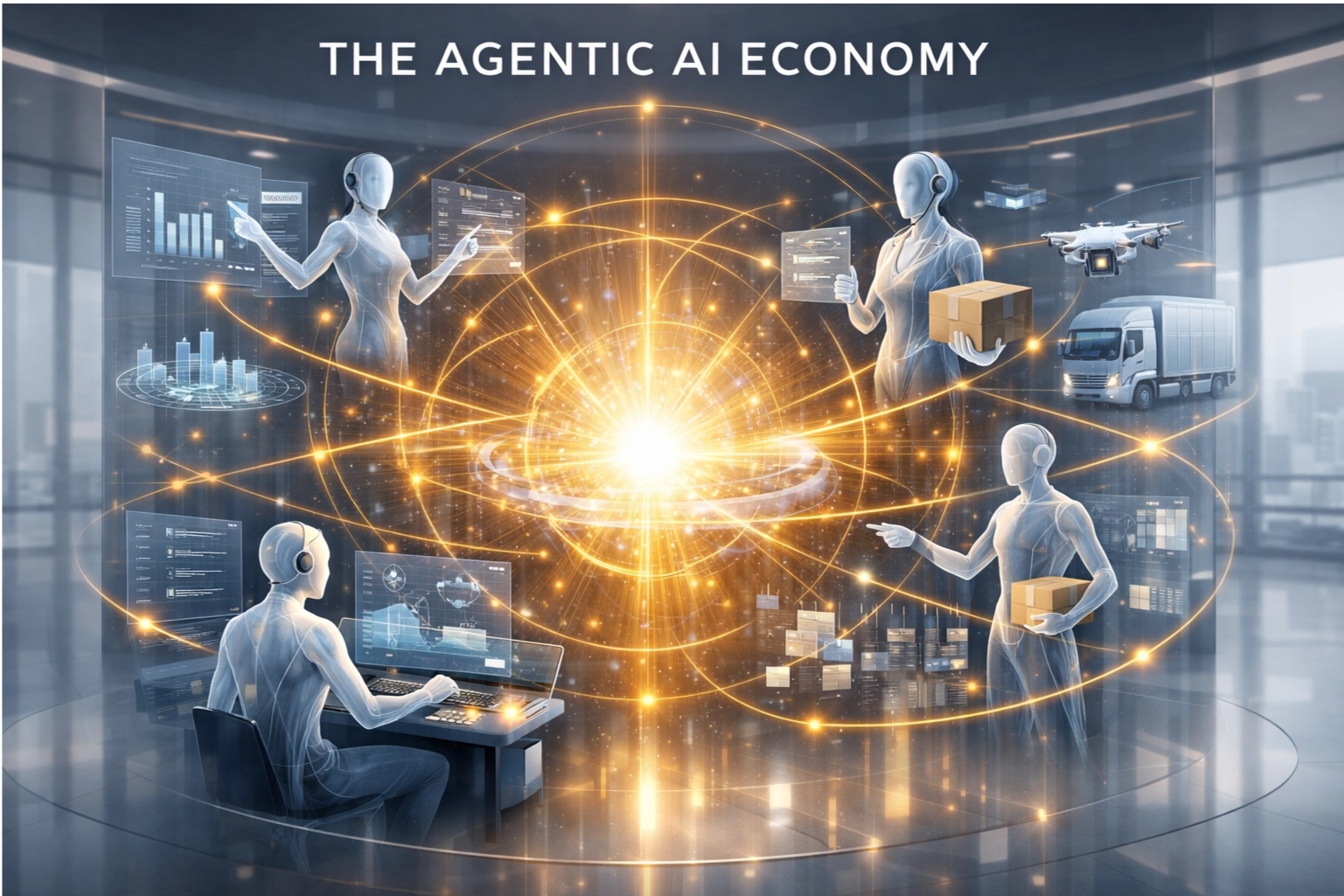
<img src=”/home/ubuntu/agentic_ai_economy_2026.png” alt=”The Agentic AI Economy: A Connected Digital Workforce”>
Conclusion: Building Your Agentic Roadmap
The Agentic AI Economy is not a future possibility; it is the current reality of competitive business. To avoid being left behind, organizations must stop viewing AI as a chat interface and start viewing it as a workforce.
To succeed, businesses should:
•Identify ‘Agent-Ready' Workflows: Look for multi-step, data-heavy processes that currently require high manual effort.
•Invest in AI Literacy: Prepare your team for the shift from “doing” to “architecting.”
•Prioritize Multiagent Interoperability: Ensure your AI systems can collaborate across functions.
The future belongs to the architects who can master the silicon workforce. Is your business ready to lead?
References
[2] Forbes. (2025, December 31). Agentic AI Takes Over — 11 Shocking 2026 Predictions.
[3] McKinsey & Company. (2025, November 5). The State of AI: Global Survey 2025.
[4] Programming Insider. (2026, February 24). How Agentic AI Can Transform Industries by 2026.
[5] Gartner. (2025, October 20). Gartner Identifies the Top Strategic Technology Trends for 2026.
[7] McKinsey & Company. (2026). The State of Organizations 2026.