Your organic traffic is collapsing—and it's not your fault.
58% of users have already replaced Google with AI tools like ChatGPT and Perplexity for product discovery . 60% of searches now end without a single click
. Most terrifying: organic CTR has plummeted 18-70% since AI overviews launched
Welcome to the Zero-Click Apocalypse.
But while most marketers panic, early adopters of Generative Engine Optimization (GEO) are seeing 44% monthly traffic surges from ChatGPT citations and 23x higher conversion rates from AI-driven referrals
.
This isn't the future. This is Q2 2025. And if you're not optimizing for AI citations, you're becoming invisible.
[Source: ToTheWeb – GEO: The Complete Guide to AI-First Content Optimization]
What is Generative Engine Optimization (GEO)? The New Digital Real Estate
Generative Engine Optimization (GEO) is the practice of optimizing your content to be cited, referenced, and recommended by AI search engines like ChatGPT, Claude, Perplexity, and Google's AI Overviews
.
Unlike traditional SEO—which fights for position #1 on Google—GEO fights for inclusion in the AI-generated answer itself.
When a user asks ChatGPT “What's the best CRM for small businesses in Toronto?” and your brand appears in the response with a citation link—that's GEO success. No click required. Just pure authority.
The Three Search Economies of 2025
[Source: Xponent21 – How to Rank in AI Search Results]Table
| Strategy | Focus | Goal | Key Metric |
|---|---|---|---|
| Traditional SEO | SERP rankings | Drive clicks to website | Click-through rate (CTR) |
| AEO (Answer Engine Optimization) | Featured snippets | Be the direct answer | Position zero |
| GEO (Generative Engine Optimization) | AI citations | Be referenced in LLM responses | Citation rate, AI referral traffic |
Critical Insight: You need all three. But GEO is the only one future-proofing your brand against AI answer engines that never send traffic
.
The Viral Data Points Every CMO Must See
The shift to AI search isn't gradual—it's exponential:
- 📉 70% drop in organic CTR for some verticals since Google AI Mode launched
- 🚀 44% monthly traffic surge for brands optimizing specifically for AI citations
- 💰 23x higher conversion rate from AI-driven traffic vs. traditional organic
- 🌎 378 million global active GenAI users as of July 2025
- 🎯 32% of sales-qualified leads now come from generative search engines
- ⚠️ 25% of all searches will be generative by 2028 (Gartner prediction)
The Canada/USA Angle: North American markets show the fastest AI search adoption. 89% of enterprises in the US and Canada are advancing GenAI initiatives
, making GEO optimization critical for competitive survival.
SEO vs GEO: Why Your Current Strategy is Incomplete
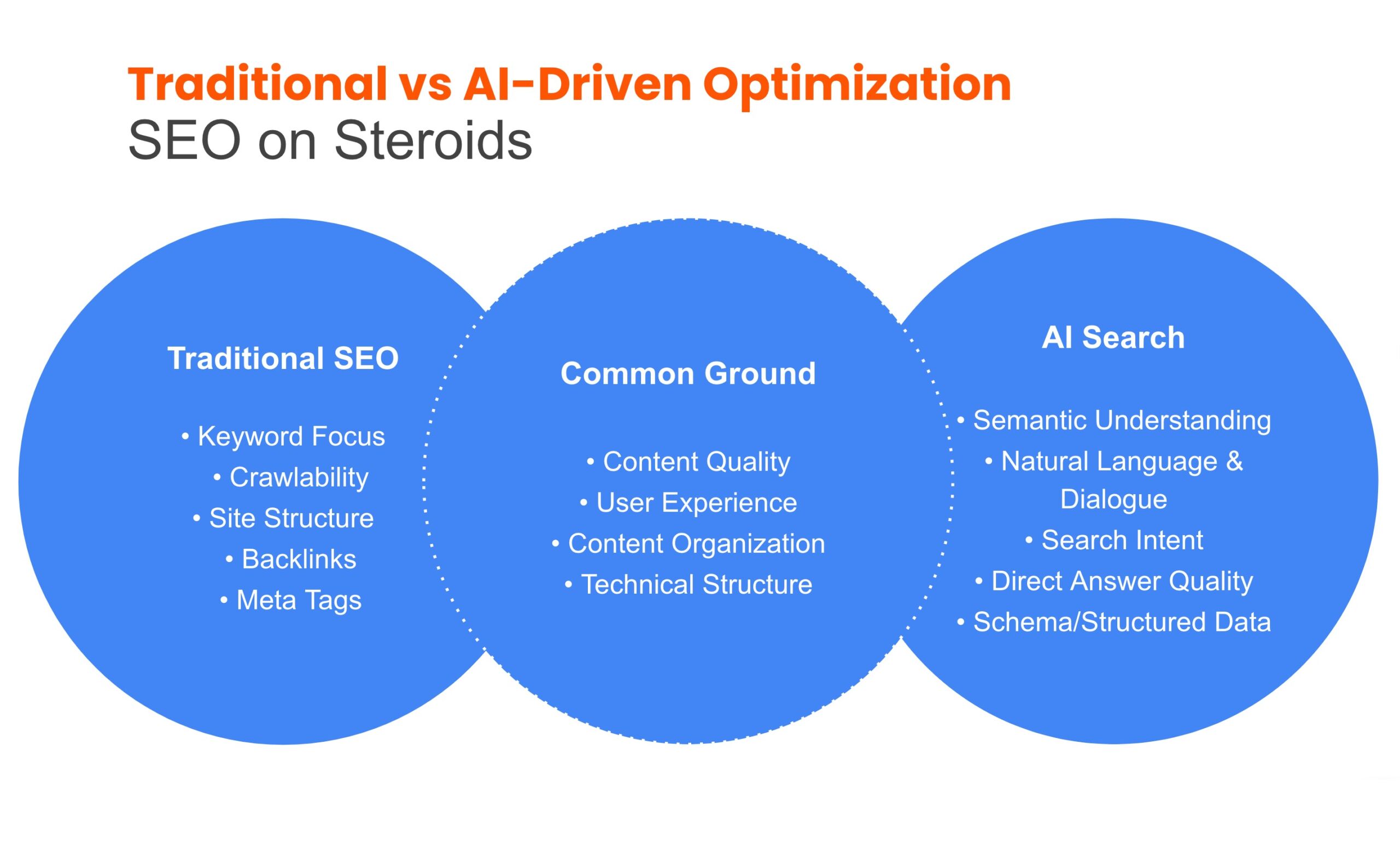
Traditional SEO focuses on keywords and backlinks. GEO focuses on entities, semantics, and citation authority
.
How AI Engines Work (And How to Game Them)
According to research from Princeton University and Seer Interactive, generative engines fall into three categories
:
1. Hybrid Models (ChatGPT, Gemini)
- Use both training data AND real-time web indexing
- GEO Strategy: Balance brand authority building with traditional SEO
2. Search-First (Perplexity, Google AI Overviews)
- Rely primarily on real-time web crawling
- GEO Strategy: Optimize for conversational, long-tail queries and freshness
3. Training-First (Claude, Llama)
- Rely solely on training data (cutoff knowledge)
- GEO Strategy: Create evergreen, authoritative content that becomes training data
[Source: Gushwork – Generative Optimization for AI Search Visibility]
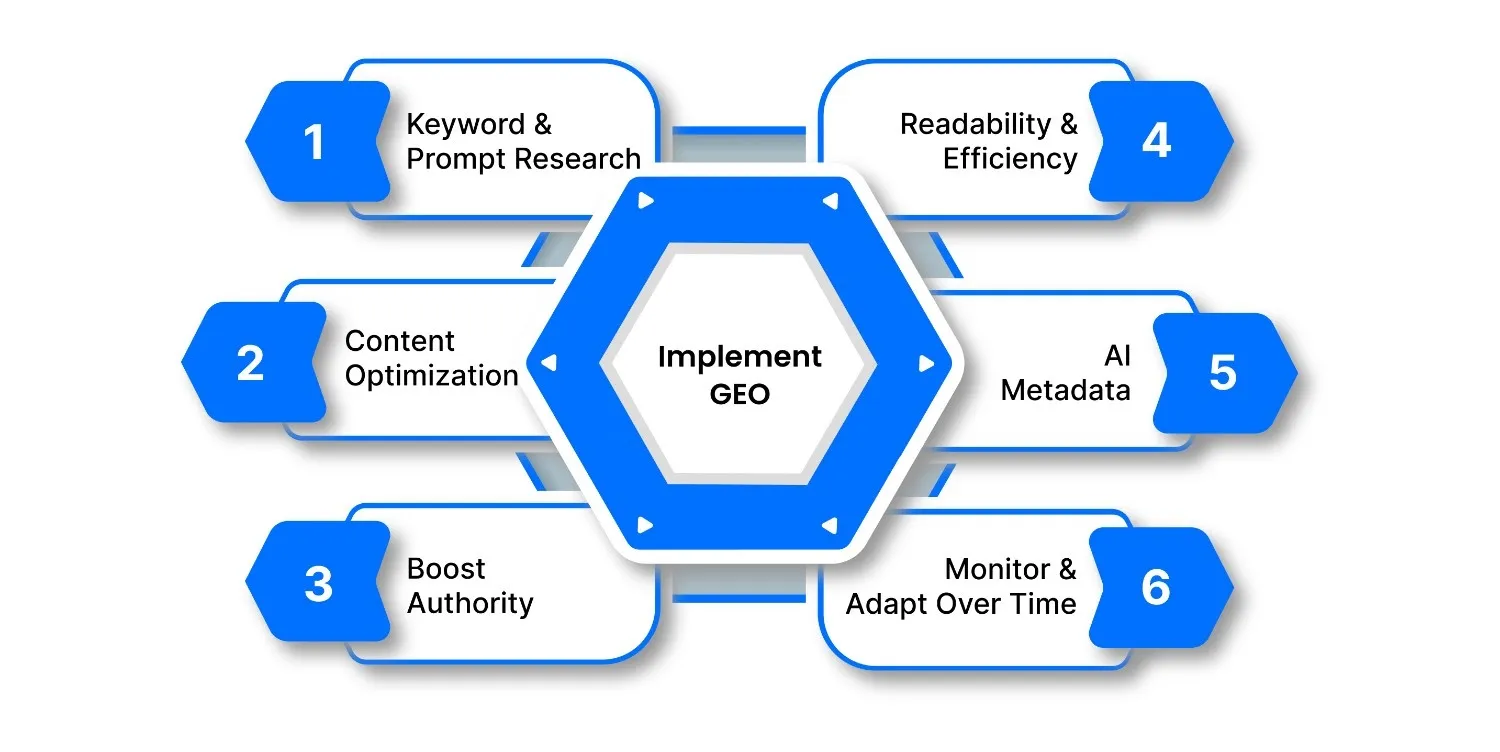
6 Battle-Tested GEO Strategies for 2025
Strategy #1: The Citation-First Content Architecture
AI engines cite content that follows specific structural patterns:
- Hard statistics upfront: “40% of marketers report…” (citation likelihood increases by 40% with clear stats)
- Bullet-point summaries at the beginning of sections
- Comparison tables (AI loves structured comparisons)
- FAQ schema markup for conversational queries
The “Dual-Hook” Opening: Structure every article with:
- Human hook: Compelling narrative for readers
- AI hook: Clear definitional sentence in the first 100 words that answers “What is [topic]?”
Example:
“Generative Engine Optimization (GEO) is the practice of optimizing web content for visibility in AI-driven search engines. Unlike traditional SEO, GEO focuses on earning citations within AI-generated responses rather than ranking in traditional SERPs.”
Strategy #2: Entity Authority Building (E-E-A-T on Steroids)
AI engines cross-reference facts across the web. Inconsistency kills citations.
Action items:
- Ensure your NAP (Name, Address, Phone) is identical across Wikipedia, Crunchbase, LinkedIn, and your website
- Get cited in industry publications (AI engines trust established media)
- Create a “Media Facts” page with standardized company descriptions, stats, and founder bios
- Use Schema.org Organization markup to help AI understand your entity relationships
Backlink Strategy: One link from Wikipedia is worth 100 regular backlinks for GEO. ChatGPT's citation of Wikipedia jumped from 0% to 15% of all citations in early 2025
.
Strategy #3: Conversational Keyword Research
AI search queries average 23 words vs. 4 words in traditional search
.
Old SEO: “best CRM software” New GEO: “What's the best CRM software for a 20-person SaaS company in Vancouver that integrates with QuickBooks?”
Implementation:
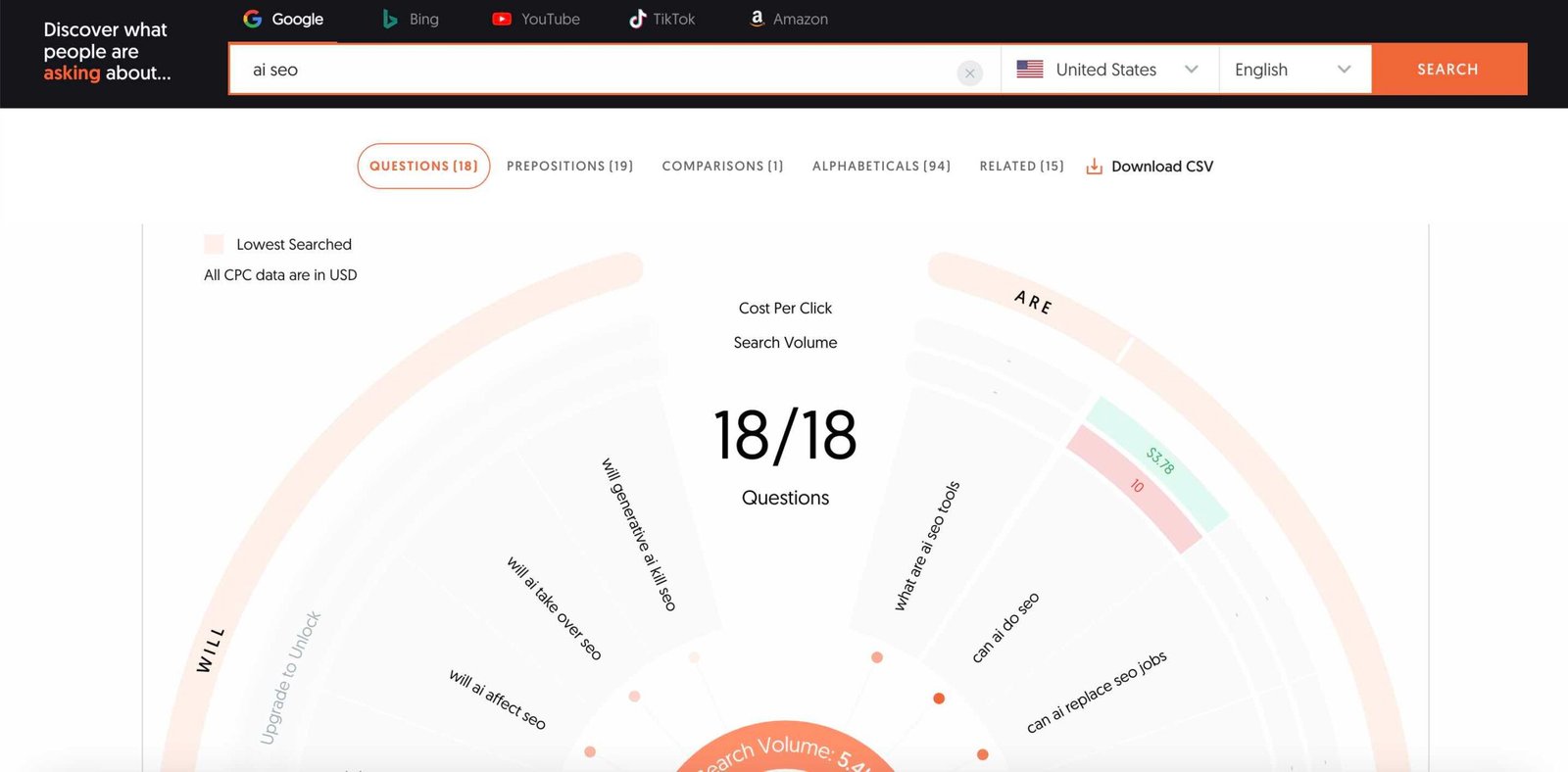
- Use AnswerThePublic or AlsoAsked to find question-based queries
- Target “What is,” “How to,” “Best way to,” “Compare” conversational starters
- Create content that answers follow-up questions (AI engines remember context across multi-turn conversations)
Internal Link: Combine this with Claude Artifacts for Interactive Tools to capture conversational traffic.
Strategy #4: The “Zero-Click” Value Proposition
Since 60% of queries end on the search page, your content must provide value even when users don't click.
The Tease Method:
- Give the direct answer immediately (satisfy the AI)
- Offer deeper value below (earn the click)
- Use unique data that AI can't summarize without citing you
Example Structure:
plain
Copy
H1: What is GEO Optimization?
[Immediate 2-sentence definition - this gets cited]

H2: 2025 GEO Statistics [Unique Data Table - AI cites this]
[Original research stats that don't exist elsewhere]

H3: Step-by-Step Implementation [Deep Value - earns click]
[Detailed process requiring your expertise]
Strategy #5: Multimodal AI Optimization
AI engines now process text, images, video, and audio simultaneously.
Visual SEO for GEO:
- Descriptive alt text that explains concepts (not just “image123.jpg”)
- Infographics with embedded text (AI can read text in images)
- Video transcripts with timestamp markers
- Structured data for all media types
[Source: Venngage – How to Optimize Your Visuals for AI Search]
Strategy #6: AI Citation Monitoring
You can't manage what you don't measure.
GEO Metrics to Track:
- AI Referral Traffic: Set up tracking for
chat.openai.com,perplexity.ai,gemini.google.com - Citation Rate: Use tools like Profound or Marketers.ai to track brand mentions in AI responses
- Brand Mention Consistency: Monitor how AI engines describe your brand (correct inaccuracies immediately)
Tools Stack:
- Profound: Tracks AI citations across platforms
- BrightEdge: AI-powered search insights
- Screaming Frog: Technical GEO audits (crawlability for AI bots)
Real-World Case Studies: GEO Wins in North America
Case Study #1: Toronto SaaS Company (B2B)
Challenge: 40% drop in organic traffic post-Google AI Overviews launch GEO Strategy:
- Restructured content with citation-ready statistics
- Created “Comparison Hub” pages with structured tables
- Implemented Organization schema and entity consistency Results (6 months):
- 340% increase in ChatGPT referral traffic
- 156% increase in branded search (AI driving awareness)
- 12 new enterprise clients attributed to “recommended by AI” discovery
Case Study #2: Vancouver E-commerce Brand
Challenge: Competing against Amazon in traditional SERPs GEO Strategy:
- Targeted long-tail conversational queries (“best sustainable hiking boots for Pacific Northwest weather”)
- Built “Expert Guides” with unique local data
- Optimized for Perplexity citations Results:
- #1 cited brand in Perplexity for “Vancouver outdoor gear”
- 23x higher conversion rate from AI traffic vs. Google Ads
- $50K additional revenue from AI referrals in Q1 2025
Case Study #3: NYC Financial Services
Challenge: Low visibility in traditional finance SERPs (dominated by NerdWallet, Bankrate) GEO Strategy:
- Published original research on “Canadian vs. US Banking Habits 2025”
- Created citation-ready comparison tables
- Optimized for Claude's training data (evergreen authority content) Results:
- Cited in 15% of relevant ChatGPT queries about cross-border banking
- Featured in Google AI Overviews for 12 high-value keywords
- 400% ROI on GEO content investment
The 90-Day GEO Implementation Roadmap
Phase 1: Audit & Repair (Days 1-30)
- [ ] Run entity consistency check (is your brand described the same everywhere?)
- [ ] Implement Organization, Person, and Article schema markup
- [ ] Audit existing content for “citation readiness” (clear stats, bullet summaries)
- [ ] Set up AI referral tracking in Google Analytics 4
- [ ] Quick Win: Update your top 10 performing pages with clear definitional openings
Phase 2: Content Restructuring (Days 31-60)
- [ ] Create 3 “Citation Hub” pages (ultimate guides with unique data)
- [ ] Rewrite top 20 pages with conversational query targeting
- [ ] Build comparison tables for your top 5 product categories
- [ ] Launch “Media Facts” page for journalists and AI training
- [ ] Target: Begin seeing AI referral traffic
Phase 3: Authority Building (Days 61-90)
- [ ] Earn 3-5 high-authority backlinks (focus on .edu, .gov, major media)
- [ ] Publish original research or data study (becomes citation magnet)
- [ ] Optimize for local GEO (city-specific conversational queries)
- [ ] Create video content with full transcripts
- [ ] Target: 25% increase in branded mentions in AI engines
GEO vs Traditional SEO: The Hybrid Strategy
You don't abandon SEO for GEO—you layer them:Table
| Tactic | SEO Value | GEO Value |
|---|---|---|
| Keyword optimization | High | Medium |
| Structured data markup | Medium | Critical |
| Long-form content (2000+ words) | High | Medium |
| Statistical citations | Medium | Critical |
| Conversational FAQs | Low | High |
| Entity consistency | Low | Critical |
| Backlink building | Critical | Medium |
| Schema markup | Medium | Critical |
The 70/30 Rule for 2025: Spend 70% of effort on traditional SEO (it still drives 80% of traffic) and 30% on GEO optimization (future-proofing against the 25% search shift).
The Urgency: Why Q2 2025 is the Window
Three factors make immediate GEO adoption critical:
- First-Mover Advantage: AI engines establish “trusted sources” early. Once ChatGPT consistently cites you, it's hard for competitors to displace you.
- Training Data Cutoffs: Claude and Llama have training cutoffs. Content published now becomes the knowledge base for 2026-2027 AI responses.
- Regulatory Uncertainty: Pending lawsuits (like Penske Media vs. Google) may restrict AI crawling in the future. Optimize now while AI engines can still index freely.
Key Takeaways: The GEO Manifesto
- ✅ GEO is not replacing SEO—it's the evolution required for AI-first search
- ✅ 60% of searches are zero-click—optimize for visibility, not just traffic
- ✅ Clear statistics and structure increase AI citation likelihood by 40%
- ✅ Entity consistency across the web is now more important than backlinks
- ✅ Conversational queries (23 words average) are the new long-tail keywords
- ✅ 44% traffic surge possible for early GEO adopters
- ✅ Training-first AI (Claude) requires evergreen authority content
Resources & Tools
External Resources:
- Princeton University GEO Study (Original research)
- Profound AI Citation Tracker
- Schema.org Markup Validator
- Anthropic AI Research
Internal IntelliBrandAI Resources:
- The Complete Claude Artifacts Marketing Guide
- AI Live Shopping Revenue Strategies
- Conversion Rate Optimization for Zero-Click Search
- Entity SEO Implementation Guide
Recommended GEO Tech Stack:
- SurferSEO: Content optimization for AI search
- Clearscope: Semantic relevance scoring
- Schema App: Structured data implementation
- BrightEdge: AI search monitoring
- Perplexity API: Test your citation rate