The Terrifying and Triumphant Ascent of AI: From Deep Blue to Generative Engines
Artificial Intelligence (AI) has transcended the realm of science fiction to become a pivotal force in business and technology. Its journey, marked by periods of both fervent optimism and skepticism, has culminated in a transformative era where AI is not just a tool, but a strategic imperative. From the strategic depths of chess boards to the intricate algorithms powering today's generative models, AI's evolution is a testament to human ingenuity and relentless pursuit of innovation.
The Genesis of Intelligence: Early Milestones
The early demonstrations of AI's potential were often found in the arena of games, where complex rules and strategic thinking provided fertile ground for algorithmic prowess. One of the most iconic moments occurred in 1997 when IBM's Deep Blue supercomputer defeated world chess champion Garry Kasparov . This wasn't merely a victory for a machine; it was a profound statement about AI's capacity to master human-level strategic reasoning. Fast forward to 2016, Google's AlphaGo achieved a similar feat, conquering the ancient and infinitely more complex game of Go by defeating world champion Lee Sedol . These milestones showcased AI's commercial potential and hinted at its future applications beyond the gaming world.
However, the path of AI has not been linear. Periods of intense investment and breakthroughs were often followed by
periods of low investment and disillusionment, famously known as “AI winters” . These cycles of boom and bust characterized the early decades of AI research, but the current era is distinctly different, fueled by massive corporate spending and a clear path to commercialization.
The Transformer Revolution and the Rise of Generative AI
The landscape of AI was irrevocably altered in 2017 with the publication of the seminal paper “Attention Is All You Need” by eight scientists at Google . This paper introduced the Transformer architecture, a novel neural network design that dramatically improved the efficiency and effectiveness of processing sequential data, particularly in natural language processing. The impact of the Transformer was profound; its authors later left Google to found startups now collectively valued at over four billion dollars, a testament to the commercial power of this innovation .
The true market disruption, however, arrived in late 2022 with the launch of OpenAI's ChatGPT. This generative AI model, built upon the Transformer architecture, achieved an unprecedented 100 million users in just two months with virtually no marketing spend . Its rapid adoption sent shockwaves through the tech industry, reportedly prompting a “Code Red” at Google and igniting an intense race for Artificial General Intelligence (AGI) . Companies like Microsoft, Google, and Amazon are now investing hundreds of billions into AI research and development, pushing the boundaries of what's possible.
The Hardware Powering the Revolution: Nvidia's Journey
Behind every significant AI breakthrough lies powerful hardware, and Nvidia has emerged as a dominant force in this domain. Founded with a modest $600 in a Denny's diner, Nvidia pioneered the GPU (Graphics Processing Unit) technology that proved essential for the intensive computational demands of AI and deep learning . This foresight transformed Nvidia into a trillion-dollar company, underscoring the critical role of specialized hardware in the AI revolution.
AI in Action: Autonomous Vehicles and Beyond
The practical applications of AI extend far beyond chatbots and game-playing. Autonomous vehicles, for instance, represent a tangible and impactful deployment of AI. Waymo, Google's self-driving car company, has accumulated over 200 million autonomous miles, demonstrating a remarkable safety record with 92% fewer injuries than human drivers . This highlights AI's potential to not only optimize processes but also to enhance safety and efficiency in real-world scenarios.
The Future: Generative Engine Optimization (GEO) and AI Search
As AI continues to evolve, so too must our strategies for digital visibility. The rise of generative AI models has given birth to a new paradigm: Generative Engine Optimization (GEO). Unlike traditional SEO, which focuses on optimizing for keyword-based search engines, GEO is about optimizing content for AI-driven generative models and conversational interfaces like Perplexity and ChatGPT .
To thrive in this new era, brands must adapt their content strategies to ensure their message is accurately represented and cited by AI models. Key aspects of GEO include:
•Structuring Content for AI-Friendly Summaries: Creating clear, concise, and well-organized content that AI models can easily digest and summarize .
•Elevating Citation Authority: Publishing original research and thought leadership to become a trusted source for AI models .
•Strengthening E-E-A-T (Experience, Expertise, Authoritativeness, Trustworthiness): Building brand credibility through transparent sourcing, detailed author bios, and positive trust signals .
•Integrating Multimedia and Data Assets: Using well-labeled charts, infographics, and video transcripts to provide rich answers that AI models can leverage .
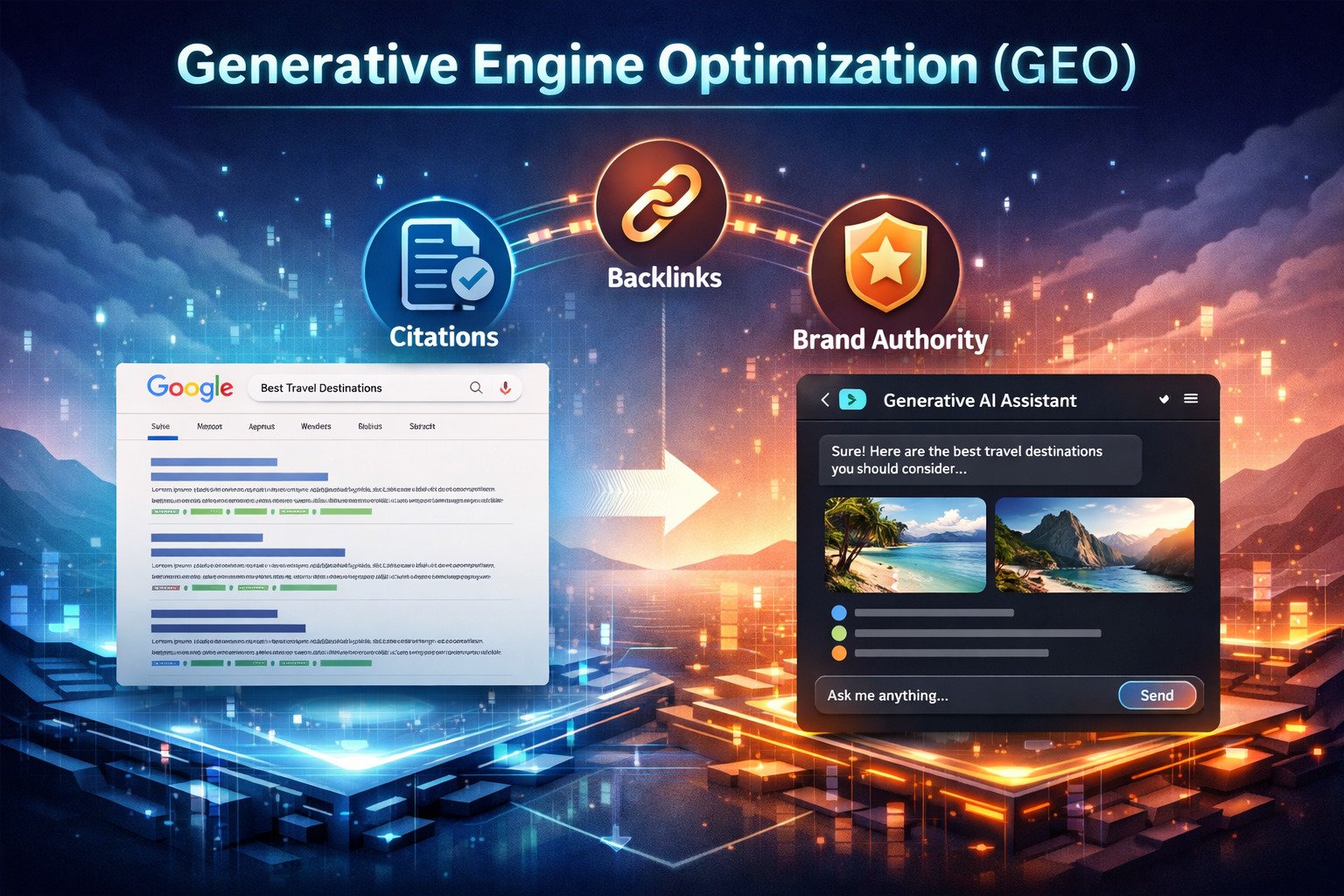
For IntelliBrand AI, embracing GEO means ensuring our innovative digital solutions and AI expertise are not only discoverable by traditional search engines but also accurately reflected in AI-generated responses. This involves a continuous process of optimizing technical signals, mapping user prompts, and iterating based on AI visibility and sentiment .
Key Takeaways for Your Brand
1.AI is no longer a niche technology; it's a fundamental shift. Brands must integrate AI into their strategies to remain competitive.
2.The Transformer architecture has democratized access to powerful AI capabilities. Understanding its impact is crucial for leveraging generative AI.
3.Nvidia's journey underscores the importance of foundational technology. Investing in the right infrastructure is key to AI success.
4.GEO is the new frontier of digital marketing. Optimizing for AI search engines is essential for future visibility.
External References:
[1] El extraño y terrorífico origen de la Inteligencia Artificial – YouTube. (n.d.). Retrieved from
[2] The History of AI: A Timeline of Artificial Intelligence. (n.d. ). Coursera. Retrieved from
[3] Attention Is All You Need – Wikipedia. (n.d. ). Retrieved from
[5] Denny's, GPUs & AI: The journey of Nvidia – TheStreet. (n.d. ). Retrieved from