Table of Contents
ToggleWhat Are AI Agents and Why They Matter Now
AI agents represent the next evolution of artificial intelligence autonomous systems that can perceive their environment, make decisions, and take actions to achieve specific goals without constant human intervention. Unlike traditional chatbots or basic automation tools, AI agents can learn, adapt, and execute complex multi-step tasks independently.
As we enter 2025, AI agents are transforming from experimental technology into practical business solutions. Major platforms like Salesforce, Microsoft, and Google have launched enterprise-ready AI agent systems in December 2024, signaling that this technology is ready for mainstream adoption.
The Difference Between AI Chatbots and AI Agents
Many businesses confuse AI chatbots with AI agents, but the distinction is crucial for understanding their potential impact.
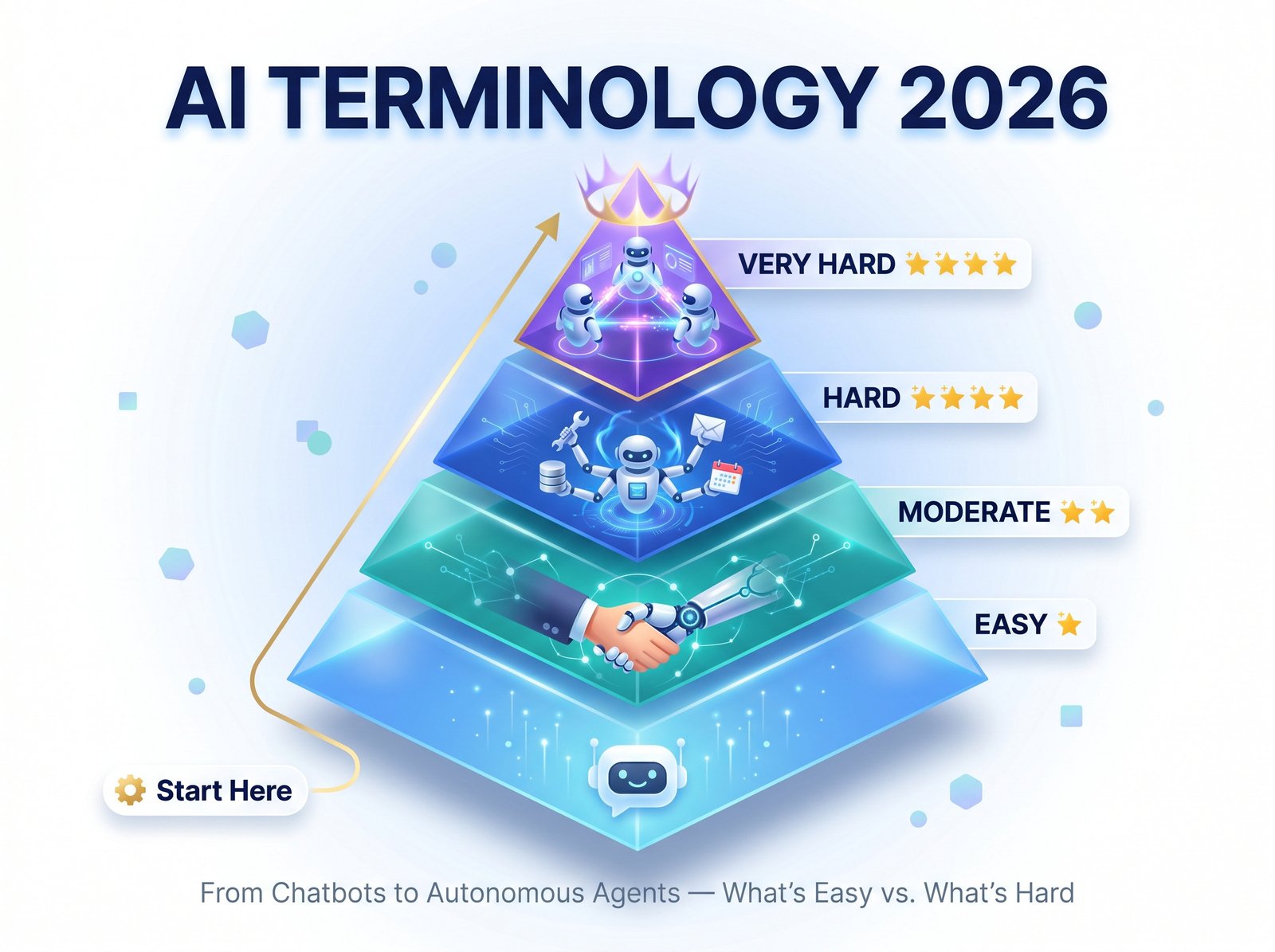
AI Chatbots respond to queries and provide information based on prompts. They're reactive tools that wait for human input and deliver pre-programmed or generated responses.
AI Agents proactively complete tasks, make decisions based on context, and can orchestrate multiple actions across different systems. They operate with a degree of autonomy that fundamentally changes how work gets done.
Think of it this way: a chatbot tells you the weather forecast when you ask. An AI agent monitors weather patterns, reschedules your outdoor meetings when rain is predicted, notifies attendees, and books alternative indoor venues—all without you lifting a finger.
How AI Agents Are Revolutionizing Business Operations
Customer Service Excellence
AI agents are transforming customer support from reactive ticket management to proactive problem resolution. These systems can monitor customer behavior, identify potential issues before they escalate, and resolve common problems automatically while seamlessly escalating complex cases to human agents with full context.
Companies implementing AI agents in customer service report resolution time reductions of 60-70% and customer satisfaction improvements of up to 35%.
Sales Process Optimization
Modern AI agents can qualify leads, schedule meetings, send personalized follow-ups, and even negotiate basic contract terms. They analyze conversation patterns, identify buying signals, and ensure no potential customer falls through the cracks.
The result is sales teams that focus exclusively on high-value interactions while AI agents handle the time-consuming administrative work that typically consumes 40-50% of a salesperson's day.
Marketing Automation That Actually Thinks
Traditional marketing automation follows rigid if-then rules. AI agents understand context, analyze campaign performance in real-time, and adjust strategies dynamically. They can create personalized content variations, optimize ad spending across platforms, and identify emerging trends in customer behavior.
This shift from programmed automation to intelligent automation means marketing campaigns that continuously improve without constant manual optimization.
Operations and Workflow Management
AI agents excel at orchestrating complex workflows across multiple systems. They can monitor inventory levels, predict supply chain disruptions, automatically reorder stock, coordinate with suppliers, and update stakeholders—all while learning from each interaction to improve future decisions.
Real-World Applications Driving ROI in 2025
E-commerce and Retail
AI agents manage dynamic pricing strategies, personalize product recommendations based on browsing behavior, handle returns and exchanges, and predict inventory needs with remarkable accuracy. Retailers using AI agents report inventory cost reductions of 20-30% while simultaneously improving product availability.
Professional Services
Law firms, consulting agencies, and accounting practices deploy AI agents to handle document review, schedule client meetings, prepare preliminary research, and manage billing processes. This technology allows professionals to focus on strategic advisory work while agents handle routine but essential tasks.
Healthcare Administration
Medical practices use AI agents to manage appointment scheduling, insurance verification, patient follow-ups, and prescription refills. These systems reduce administrative burden on healthcare providers while improving patient experience through faster response times and fewer scheduling errors.
Real Estate Operations
AI agents in real estate handle lead qualification, property matching, tour scheduling, document preparation, and transaction coordination. Agents report spending 70% more time on high-value client interactions and closing deals faster with fewer administrative bottlenecks.
Key Benefits of Implementing AI Agents
24/7 Operational Capacity – AI agents work continuously without breaks, handling tasks across time zones and ensuring business operations never pause.
Scalability Without Proportional Cost – Adding capacity means deploying more AI agents, not hiring and training additional staff. Businesses can scale operations rapidly without linear cost increases.
Consistency and Accuracy – AI agents execute tasks with consistent quality, eliminating human error in routine processes while maintaining detailed logs of every action.
Data-Driven Decision Making – These systems continuously analyze performance data, identify patterns, and provide insights that inform strategic business decisions.
Employee Empowerment – By handling repetitive tasks, AI agents free human workers to focus on creative problem-solving, relationship building, and strategic thinking.
Challenges and Considerations
Integration Complexity
Implementing AI agents requires connecting multiple systems and ensuring data flows seamlessly. Businesses need clear integration strategies and may require technical expertise to establish these connections properly.
Data Quality Requirements
AI agents are only as effective as the data they access. Organizations must ensure clean, well-organized data across systems before deploying AI agents to avoid amplifying existing data problems.
Change Management
Introducing AI agents changes how teams work. Successful implementation requires clear communication about how these tools augment rather than replace human workers, along with training to help employees collaborate effectively with AI systems.
Security and Compliance
AI agents accessing sensitive business data require robust security measures and compliance protocols. Organizations must establish clear governance frameworks defining what actions agents can take autonomously and what requires human approval.
How to Get Started with AI Agents
Step 1: Identify High-Impact Use Cases
Begin by mapping repetitive, time-consuming tasks that follow predictable patterns. Look for processes where delays create bottlenecks or where human capacity limits growth.
Step 2: Start Small and Specific
Launch with one well-defined use case rather than attempting enterprise-wide transformation. A focused pilot allows you to learn, adjust, and demonstrate value before scaling.
Step 3: Choose the Right Platform
Evaluate AI agent platforms based on your existing technology stack, specific use cases, and technical capabilities. Consider solutions that integrate with tools you already use.
Step 4: Establish Clear Metrics
Define success criteria before implementation. Track time savings, error reduction, cost efficiency, and user satisfaction to measure ROI and guide optimization.
Step 5: Plan for Continuous Improvement
AI agents improve through use. Establish processes for monitoring performance, gathering feedback, and refining agent behavior based on real-world results.
The Future of AI Agents in Business
Industry analysts predict that by 2027, over 80% of businesses will deploy some form of AI agent technology. The competitive advantage will belong to organizations that implement these systems thoughtfully and strategically.
We're moving toward a future where every knowledge worker has a team of specialized AI agents handling routine tasks, providing research and insights, and managing workflows. This shift will fundamentally redefine productivity and allow businesses to operate with unprecedented efficiency.
The question is no longer whether to adopt AI agents, but how quickly you can implement them strategically to maintain competitive advantage.
Taking Action in 2025
AI agents represent the most significant shift in business automation since the internet revolutionized commerce. Organizations that embrace this technology now will establish operational advantages that compound over time.
The key is starting with clear objectives, choosing appropriate use cases, and building implementation expertise through practical experience. The businesses thriving in 2025 and beyond will be those that successfully integrate AI agents into their operations today.